


Situational Awareness Self Defense Tips That Work
A safe decision often starts before anything feels dangerous. It starts when you notice the car that has circled the parking lot twice, the person standing too close behind you at the checkout line, or the moment your child becomes distracted walking ahead of you. These situational awareness self defense tips are not about living in fear. They are about moving through daily life with calm attention, strong boundaries, and practical choices.
At The Blazing Dragon Karate Dojo, we believe self-defense begins from the inside first. Physical skills matter, but confidence, focus, and the willingness to listen to your instincts can help prevent many unsafe situations from escalating. For women, children, teens, and families, awareness is a skill that grows with practice.
What Situational Awareness Really Means
Situational awareness is the habit of noticing what is happening around you, understanding what may be out of place, and making a safe decision early. It does not mean assuming every stranger is a threat. It means giving yourself enough information and enough space to choose wisely.
Think of it as staying present. When you walk from a store to your car, you know where you parked, who is nearby, which routes are open, and where you could go for help if you needed it. When a child arrives at a birthday party or after-school activity, they know who is responsible, where the exit is, and how to reach a trusted adult.
Awareness is not paranoia. It is self-respect in action. You are reminding yourself and your family that your safety deserves your attention.
Situational Awareness Self Defense Tips for Daily Life
Keep your head up and your hands free
Looking down at a phone can make anyone less aware of their surroundings. This does not mean you can never send a text or check directions. It means choosing the right moment. Before leaving a building, pause, put the phone away, and look around. When approaching your vehicle, have keys ready instead of searching through a bag beside the driver’s door.
For kids and teens, this lesson can be simple: when walking to a car, crossing a street, or entering a new place, eyes up and earbuds out. They do not have to be scared to be observant. They just need to be present.
Hands free also gives you better balance and faster options. A heavy armful of bags, a phone in one hand, and keys tangled in the other can make it harder to move away quickly. When possible, organize before you step outside.
Notice behavior, not appearances
Good awareness is not about judging people by their clothing, race, age, or background. It is about noticing behavior that creates concern. Someone repeatedly invading your personal space, following your path, blocking your way, watching you too closely, or ignoring a clear boundary deserves your attention.
Teach children the same principle in age-appropriate language. They do not need to decide whether someone “looks dangerous.” Instead, they can notice when an adult asks them to keep a secret, tries to separate them from their group, will not accept “no,” or makes them feel confused or uncomfortable.
That uncomfortable feeling is not something to dismiss just to avoid seeming rude. Your instincts may be responding to details your mind has not fully sorted out yet. Create distance, move toward other people, and contact someone you trust.
Trust your discomfort and make a simple change
Many people hesitate because they do not want to overreact. They worry about being impolite, embarrassing, or wrong. But leaving an uncomfortable situation is not an accusation. It is a choice to protect your peace and safety.
If someone makes you uneasy in a parking lot, go back inside the business. If you are walking and feel followed, cross toward a busy area or enter an open store. If a date ignores your boundaries, call a friend, ask staff for help, or leave. You never need permission to remove yourself from a situation that does not feel right.
For children, practice a family rule: if something feels wrong, they can leave, say no loudly, and tell a trusted adult. They will never be in trouble for asking for help. That promise makes it more likely they will speak up when it matters.
Give yourself space and an exit
Personal space is a safety tool. When possible, avoid letting unfamiliar people close enough to touch or trap you. Keep a comfortable gap while waiting in line, using an elevator, or speaking with someone you do not know well.
In restaurants, events, classrooms, and public spaces, casually notice exits and open pathways. You do not need to sit with your back against a wall everywhere you go. The goal is simply to avoid becoming boxed in when you have a choice.
Space also matters in conversations. If someone steps closer after you move back, that is useful information. Use a clear voice: “Please give me space.” Then move toward people, light, and help. Clear words can draw attention and establish a boundary before physical contact ever happens.
Build Safety Habits as a Family
Families who practice together are more prepared together. A few regular conversations can turn awareness into an everyday habit without making home feel tense or fearful.
Start with a simple plan for common situations. Decide where to meet if you get separated at a store or community event. Make sure children know their full name, a parent or guardian’s phone number, and how to identify safe helpers such as a uniformed employee, teacher, or a parent with children nearby. For teens, discuss rideshares, parties, group outings, and the importance of a code word or text message that means, “Please call me. I need help getting out of here.”
Practice what to do, not just what to avoid. A child who knows “don’t talk to strangers” may still freeze if a stranger approaches. A child who has practiced saying, “No, I need to ask my mom,” and walking toward a safe adult has a clearer response. The same is true for adults. Rehearsing a strong verbal boundary makes it easier to use under stress.
Here are four habits worth practicing as a family:
Check your surroundings before getting in or out of a car.
Keep phones away when walking through parking lots or unfamiliar areas.
Tell someone where you are going and when you expect to return.
Speak up early when something feels off, even if you are not sure why.
These habits are not restrictions on your freedom. They are small acts of preparation that help you enjoy your community with greater confidence.
Use Your Voice Before You Need Your Hands
Self-defense is not only about strikes, blocks, or escaping a grab. Your voice can create space, attract witnesses, and communicate that you are not an easy target. Practice speaking from the diaphragm, with a steady and direct tone: “Stop.” “Back up.” “Do not touch me.” “I need help.”
A loud voice may feel uncomfortable at first, especially for people who have been taught to be agreeable, quiet, or accommodating. Women and girls are often pressured to soften their discomfort so others will not feel offended. But protecting yourself is not rude. A boundary is not disrespectful simply because another person does not like it.
For younger children, teach the difference between a polite indoor voice and a safety voice. A safety voice is loud, clear, and used when they need immediate attention. Role-playing at home can make this feel less intimidating. Let them practice yelling, “This is not my parent!” or “Help! I do not know you!” while moving toward a safe adult.
Awareness Works Best With Practical Training
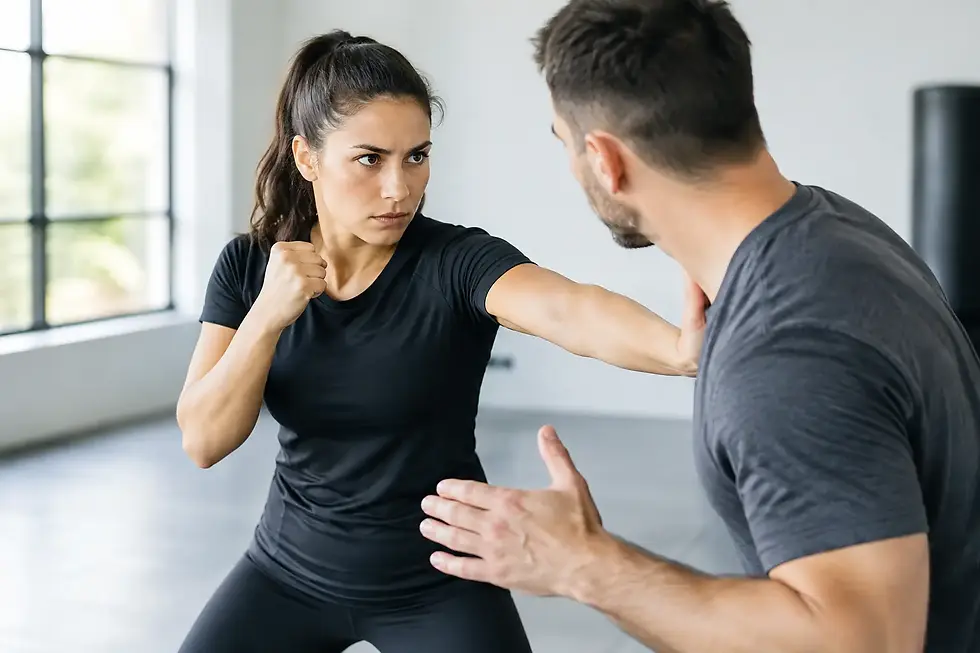
Situational awareness can reduce risk, but it cannot control another person’s actions. Sometimes danger happens quickly, and no one should blame themselves for what someone else chooses to do. That is why practical self-defense training matters. It gives people a chance to practice movement, balance, boundary-setting, escape skills, and decision-making in a supportive environment.
Training also helps replace panic with purposeful action. A student learns that they do not have to be the strongest person in the room to protect themselves. They may be able to create distance, break contact, use their voice, run, or get help. The best response depends on the situation, the environment, and who is involved.
For parents, karate training can support the conversations you are already having about confidence, bullying, peer pressure, and personal safety. For women, it can be a powerful place to reconnect with your own strength, regardless of fitness level or past experience. The goal is not to walk around expecting a fight. The goal is to know you can respond with clarity if a situation asks more of you.
Awareness is built one choice at a time: look up, listen to your instincts, hold your boundaries, and teach your family that their safety and dignity are always worth protecting.


Comments