


Practical Self Defense for Everyday Safety
A safer day rarely starts with a dramatic moment. It starts with the choices made in a parking lot after work, at a school pickup line, while answering the door, or when a child feels pressured to go somewhere that does not feel right. Practical self defense everyday safety is not about living afraid. It is about building the awareness, confidence, and steady habits that help you and your family make safer choices before a situation becomes dangerous.
At The Blazing Dragon Karate Dojo, we believe protection begins from the inside first. A strong voice, clear boundaries, focused attention, and the confidence to leave are skills that matter for children, women, and entire families. Physical techniques can help, but the first goal of self-defense is always to get home safely.
Practical Self Defense Everyday Safety Starts Before Trouble
Many people picture self-defense as a physical confrontation. In real life, the most useful skill is often noticing when something feels off and giving yourself permission to act early. That might mean choosing a brighter path to your car, declining a ride from someone you do not know well, or leaving a conversation that becomes aggressive.
Awareness does not mean staring at every stranger with suspicion. It means being present enough to notice your surroundings. When walking from a store to your vehicle, keep your head up, scan the area, and avoid getting so absorbed in a phone call or screen that you lose track of who is nearby. Have keys ready before you reach the car, rather than searching through a bag while standing beside it.
For families, awareness becomes easier when it is discussed without fear. Parents can ask children simple questions: Who knows where you are? What would you do if you got separated from us? Which adults can you ask for help? These conversations should feel like preparation, not punishment. Children need to know they will be listened to when they say something made them uncomfortable.
Use Your Voice and Your Boundaries
A clear boundary is one of the most practical safety tools a person can carry. It does not need to be rude, and it does not need a long explanation. “No.” “Stop.” “Back up.” “I need help.” These are complete statements when someone is ignoring your comfort or personal space.
Many women have been taught to soften their response to avoid seeming impolite. Children may worry that saying no to a friend will make them unpopular. But safety is more valuable than keeping someone else comfortable. When a person pressures you to stay, follow them, keep a secret, accept unwanted contact, or go somewhere private, that pressure is information. Listen to it.
Practice saying boundaries out loud at home. Use a firm voice that is loud enough to be heard, with shoulders back and eyes forward. A confident posture can communicate that you are alert and willing to draw attention if needed. This is not a guarantee that someone will respect a boundary, but it can discourage testing behavior and helps you respond without freezing.
For children, keep the language direct. They do not owe anyone a hug, tickle, or conversation that makes them uncomfortable. They can move away, find their parent or trusted adult, and say what happened. Teaching body autonomy early helps children grow into teens and adults who recognize their right to personal space.
Make Everyday Routines Safer
Safety habits work best when they fit ordinary life. You do not need to turn every errand into a security drill. Start with a few repeatable actions and let them become normal.
At home, make sure children know their full name, a parent or guardian’s phone number, and their home address when they are old enough to remember it. Establish a family password for unexpected pickups. If someone says a parent sent them, the child should know not to go anywhere unless that person knows the password.
When out in public, choose a meeting spot in case the family gets separated. In a large store, a child should look for an employee, cashier, or another parent with children rather than wandering outside to search. Teens benefit from clear check-in expectations, especially when visiting friends, attending events, or using rideshare services.
In parking lots, walk with purpose. Pay attention before unlocking the car, and get inside promptly once you reach it. If something about the area feels wrong, trust that feeling. Go back into the store, ask for an escort, call someone, or wait in a well-lit area. There is no prize for proving you are not worried.
Online safety belongs in this conversation too. Children and teens should know that a person online may not be who they claim to be. They should never share their location, school schedule, private photos, or personal information with someone they do not know in real life. If an online conversation becomes threatening, secretive, or sexual, they need a trusted adult who will help without shame.
If a Situation Turns Physical, Focus on Escape
No self-defense class can promise that every situation will go a certain way. Size, surprise, surroundings, injuries, and the number of people involved all change what is possible. That is why practical training emphasizes simple responses under stress, not flashy moves that require perfect timing.
If you feel threatened, create distance if you can. Move toward people, light, staff, security, or an open business. Use your voice to attract attention. Say specific words such as, “Call 911,” or “This person is hurting me,” because bystanders are more likely to respond when they understand what is happening.
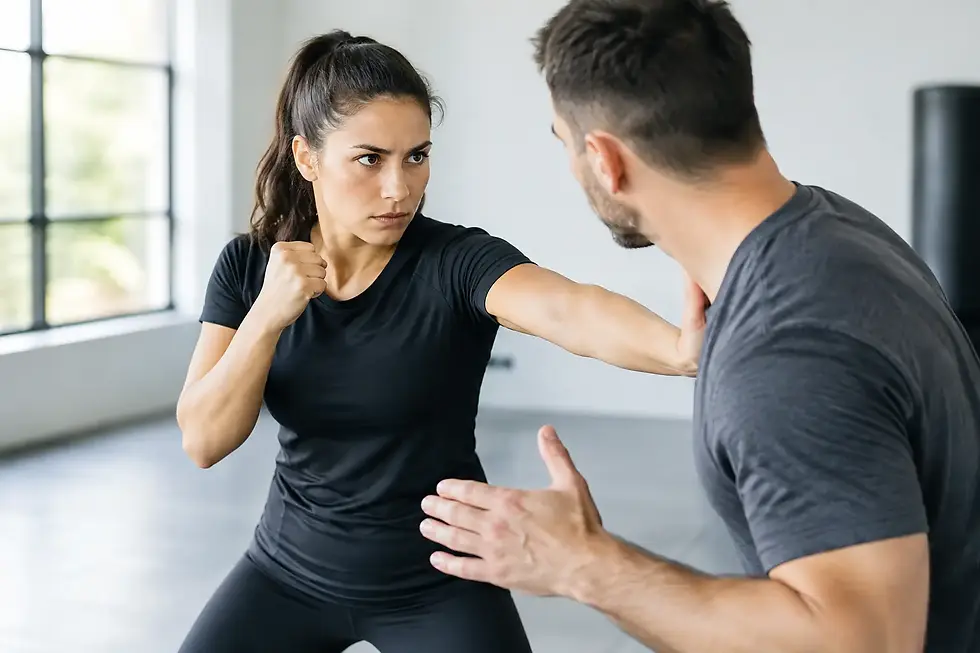
If physical contact cannot be avoided, the purpose is not to win a fight. It is to protect yourself long enough to break free and escape. A good class teaches students how to manage distance, use balance and body positioning, respond to common grabs, and stay focused when adrenaline rises. It also teaches judgment: when to run, when to get help, and why leaving is always the best outcome when it is available.
This is especially important for children. Kids do not need to be taught to fight their way through every disagreement. They need the confidence to avoid escalating conflict, seek adult support, and protect themselves if an adult or older child tries to force them somewhere. Discipline includes knowing when not to engage.
Confidence Is a Safety Skill You Can Practice
Confidence is not pretending you are never nervous. It is trusting that you can notice a problem, make a decision, and take action. That kind of confidence grows through repetition. When students practice standing strong, speaking clearly, moving with balance, and responding to realistic scenarios, those lessons become more available under pressure.
Traditional karate can offer more than a workout because it gives people a place to practice these skills consistently. Students build coordination and physical conditioning, but they also learn focus, respect, self-control, and perseverance. A child who learns to keep trying through a challenging drill may carry that same strength into school. A woman who finds her voice in class may use it sooner when a stranger crosses a line.
Families who train together have an added advantage: safety becomes a shared language. Parents can reinforce lessons at home, siblings can practice respectful boundaries with one another, and everyone has a chance to grow stronger together. The goal is not to raise fearful children or anxious adults. It is to raise people who know their worth, respect others, and recognize that they have choices.
Start small this week. Practice your family pickup password, identify a meeting place at your favorite store, and say one boundary phrase out loud until it feels natural. Preparedness is not panic. It is a quiet promise to yourself and the people you love: we pay attention, we trust ourselves, and we look out for one another.


Comments