


How Karate Builds Resilience in Everyday Life
A missed kick. A belt that takes longer than expected. The first time a child has to stand in front of the class and try again after getting a move wrong. These are small moments, but they carry a big lesson: karate builds resilience by teaching students that difficulty is not a stop sign.
For families, resilience is more than being tough. It is the ability to recover after disappointment, stay steady under pressure, make safe choices, and keep growing when life feels uncomfortable. At The Blazing Dragon Karate Dojo, traditional karate gives children, women, and families a place to practice those skills with structure, encouragement, and respect.
Resilience Is Built Through Repetition
Most people do not become resilient because someone gives them a motivational speech. They become resilient because they face manageable challenges repeatedly and learn that they can handle them.
Karate creates that kind of practice. A student may struggle to remember a sequence, balance during a kick, or maintain focus through conditioning. The answer is not to quit or pretend the challenge is easy. The answer is to breathe, listen, adjust, and try again.
That process matters for children who may be dealing with school pressure, friendship changes, or the fear of making mistakes. It matters for adults who have spent years putting everyone else first. In class, progress comes one repetition at a time. Students learn that their current ability is a starting point, not a label.
A resilient student does not need to be the strongest person in the room. They need to believe that effort, attention, and consistent practice can move them forward.
Karate Builds Resilience Without Shaming Students
There is a difference between challenging someone and tearing them down. Real martial arts training asks students to work hard while protecting their dignity.
A supportive dojo does not expect beginners to arrive confident, flexible, coordinated, or experienced. Children may be shy. Women may feel nervous about beginning self-defense training. Parents may worry that they are too busy or out of shape to join a class. Those feelings are normal, and they are not reasons to stay on the sidelines.
Karate gives each student a clear next step. Stand with intention. Learn the stance. Practice the block. Focus on the instructor. Try the combination again. When students receive correction in a respectful environment, they learn a powerful life skill: feedback is not rejection.
This is especially valuable for children. A child who can accept correction without falling apart is better prepared to learn at school, respond to a coach, and work through conflict at home. They begin to understand that being corrected means someone believes they are capable of improving.
The Confidence to Face Pressure
Resilience shows up long before a major crisis. It appears when a child is pressured to go along with behavior they know is wrong. It appears when a woman notices that a situation does not feel safe. It appears when someone has to speak clearly, set a boundary, or leave a harmful situation.
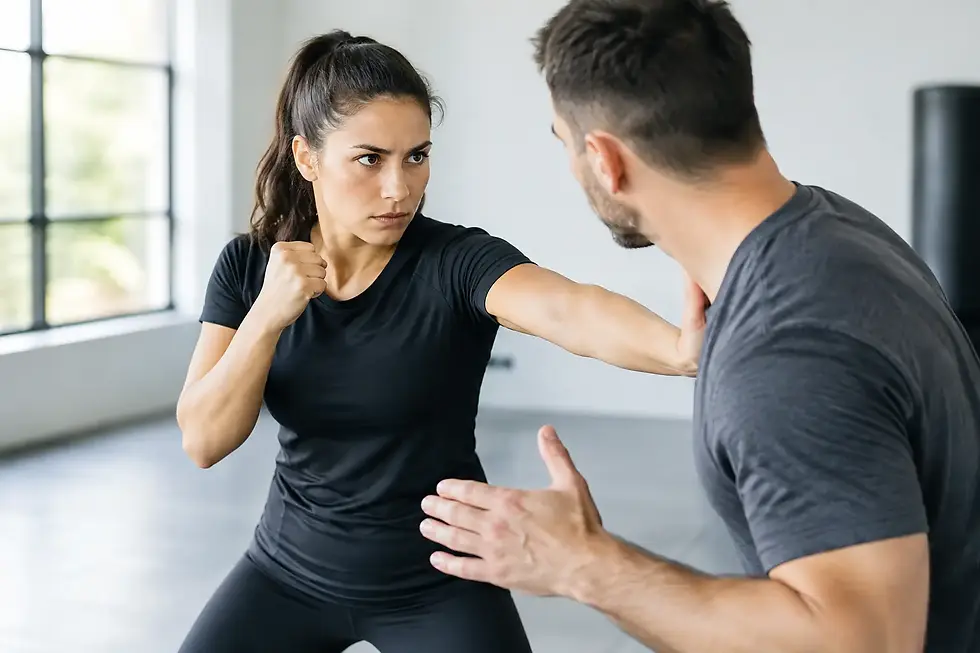
Karate training supports that inner steadiness. Students practice awareness, posture, voice, and purposeful movement. They learn to pay attention to their surroundings rather than moving through life distracted and unsure. Practical self-defense is not about looking for conflict. It is about recognizing risk, using good judgment, and knowing that personal safety deserves respect.
For children, confidence can make peer pressure less powerful. A young person who has practiced standing tall, speaking with clarity, and trusting their own judgment may find it easier to say no. They are less likely to believe they must earn acceptance by ignoring their values.
For women, self-defense training can be a reminder that safety is not selfish. Learning to create space, use a strong voice, and respond decisively can shift how a person carries herself in everyday settings. The goal is not fear. The goal is preparation and greater confidence.
Discipline Gives Resilience a Home
Confidence is helpful, but confidence without habits can disappear on a hard day. Discipline gives resilience somewhere to live.
Karate asks students to arrive, pay attention, follow through, and respect the learning process. Over time, those expectations become routines. A child learns to keep working even when a skill is not exciting yet. An adult learns that a demanding class can be completed one movement at a time.
This does not mean every class will feel easy or every student will progress at the same pace. In fact, karate is valuable because it makes room for different starting points. A student with strong coordination may need to build patience. A student who is naturally quiet may need to build a stronger voice. A student who is physically powerful may need to learn control.
The trade-off is that resilience takes time. There are no shortcuts around consistent attendance, practice, and accountability. But that is also the gift. Students earn evidence that they can keep promises to themselves.
A Place Where Families Rise Together
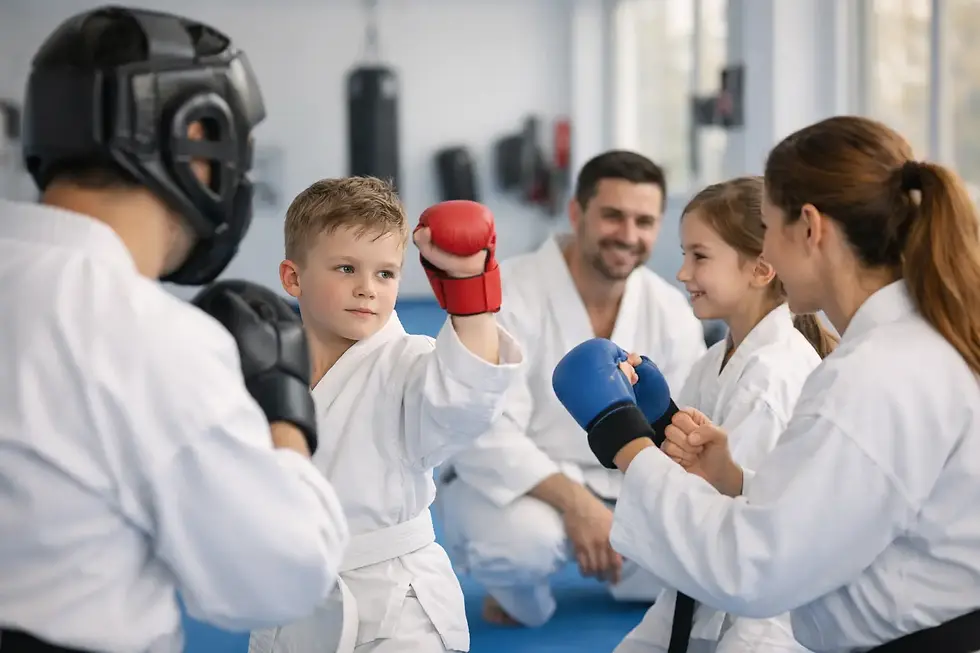
Children learn resilience most deeply when the adults around them model it. When parents and children train in the same community, they can encourage one another through the awkward beginning stages, celebrate small breakthroughs, and talk about what they are learning beyond class.
A family does not have to train at the same skill level to grow together. One person may be working on focus, another on fitness, and another on confidence after a difficult season. What connects them is the shared practice of showing up.
Family-centered martial arts also creates positive conversations at home. Instead of asking only, “Did you win?” parents can ask, “What was hard today?” or “What did you do when you wanted to give up?” Those questions help children see that effort and character matter as much as achievement.
For busy North Texas families, that kind of connection can be more meaningful than another activity that separates everyone into different schedules and sidelines. Karate class becomes a regular space for movement, discipline, encouragement, and shared values.
Resilience Is Not the Same as Never Struggling
Sometimes people describe resilient children as if they never cry, never doubt themselves, and never need help. That is not the goal.
A resilient child can feel disappointed and still come back next class. A resilient woman can acknowledge nervousness and still learn a new skill. A resilient family can have a difficult week and choose to reconnect with the routines that make them stronger.
Karate gives students permission to be beginners. It also gives them a path beyond the beginner stage. Every class offers another chance to practice calm under pressure, respectful communication, and determined effort.
There will be days when a student feels proud of a new skill and days when progress feels slow. Both belong in the journey. The important lesson is that a setback does not get the final word.
Start With One Brave Step
The first class may feel like the hardest part. New students often wonder whether they will fit in, whether they will know what to do, or whether they are ready. Readiness rarely arrives before action. It grows when someone steps into a welcoming space and gives themselves permission to learn.
Whether your goal is helping your child develop stronger focus, building family connection, improving fitness, or gaining practical self-defense confidence, begin where you are. Show up, listen, practice, and let each small act of courage become proof of what you can handle.

Comments