


Karate Conditioning Drills for Real Strength
A strong karate student is not simply the person who can do the most push-ups or kick the highest. Real strength shows up when a child keeps trying after a difficult day, when a woman stands taller and more aware of her surroundings, and when a family commits to growing together. Karate conditioning drills build that kind of strength by connecting movement, focus, discipline, and confidence.
For beginners, conditioning should feel challenging but welcoming. It is not punishment, and it should never leave someone feeling embarrassed for starting where they are. The goal is steady progress: better balance, stronger legs, more control, and the confidence to say, “I can do hard things.”
Why Karate Conditioning Is Different From a Typical Workout
A typical workout may focus on calories, a number on the scale, or lifting more weight. Those goals can be useful, but karate conditioning has a wider purpose. It prepares students to move with intention, protect their space, recover their balance, and stay focused when their bodies are working hard.
Every drill should support the skills students use in class and in life. Stances strengthen the legs and teach stability. Core work helps students control strikes and maintain posture. Footwork builds coordination and awareness. Partner exercises, when taught safely and appropriately, help students learn respect, distance, and calm decision-making.
This matters especially for children. A child who learns to hold a stance while listening for instructions is practicing more than fitness. They are practicing patience, body control, and follow-through. Those are the same qualities that can help with school focus, chores, friendships, and resisting negative peer pressure.
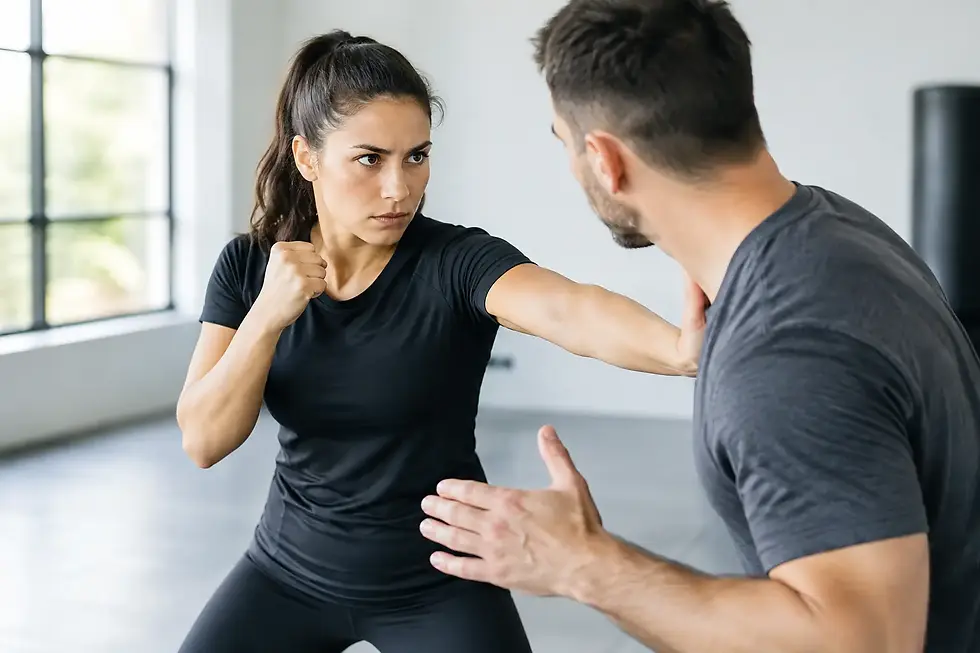
For women and adult beginners, the right conditioning program can be a powerful reminder that strength is learned. You do not need previous athletic experience to begin. You need a supportive place to practice, skilled instruction, and permission to improve one repetition at a time.
Karate Conditioning Drills That Build Useful Skills
The best karate conditioning drills are simple enough to learn, easy to adjust for different fitness levels, and meaningful enough to repeat. Quality matters more than racing through a long list of exercises.
Stance Holds for Stronger Legs and Better Balance
A solid stance is the foundation beneath every block, strike, and kick. Students can begin in a comfortable front stance or horse stance, with knees gently bent, feet grounded, and their chest lifted. Holding the stance for short intervals builds leg strength while teaching students to stay present through discomfort.
For young students, make the goal clear and encouraging: strong feet, quiet body, focused eyes. Start with 10 to 20 seconds and gradually increase the time. Adults may work longer, but proper alignment is still more valuable than a deeper stance that causes knee pain.
Stance holds also reveal an important karate lesson: power does not always look loud. Sometimes it looks like staying steady.
Controlled Squats and Lunges
Squats and lunges strengthen the hips, thighs, and glutes that drive stable movement. In karate, strong legs help students step, change direction, and kick with control instead of simply throwing their body forward.
Keep these movements slow at first. A student should be able to keep their knees aligned with their toes and maintain balance without collapsing inward. Children can practice bodyweight squats with a target behind them, such as lightly tapping a bench or chair before standing. Adults can increase the challenge by adding repetitions, pausing at the bottom, or using a deeper range of motion if it feels comfortable.
The trade-off is simple: speed can make a drill feel exciting, but slow, correct movement builds safer strength. There is a place for faster training later, once the body is ready.
Planks and Core Bracing
A strong core helps karate students transfer energy through the body, remain upright during movement, and protect their lower back. Planks are a practical starting point because they teach students to brace without holding their breath.
A full plank is not the only option. Beginners can use a high plank with hands on a wall or bench, while younger children may practice short holds from their knees. The standard is not perfection. The standard is learning to keep a long spine, steady breathing, and a calm mind when the muscles begin to work.
That calm carries beyond the mat. When students learn that effort does not have to mean panic, they gain a useful tool for stressful moments in everyday life.
Knee Raises and Chambered Kicks
Kicks begin with balance. Before practicing high or fast kicks, students benefit from controlled knee raises, often called chambering the leg. Standing tall on one foot while lifting the other knee builds hip strength, balance, and coordination.
Students can hold a wall or partner’s padded target for support while learning. The goal is to lift the knee with control, set it down softly, and repeat on both sides. Once balance improves, they can add a slow front kick and return to the chamber before placing the foot down.
This drill teaches a valuable truth for both children and adults: control comes before power. A kick that is balanced and accurate is far more useful than one that is wild.
Footwork Drills for Awareness and Agility
Karate is not practiced from one frozen spot. Students need to know how to move forward, step back, angle away, and keep their balance. Simple line drills can teach these skills without overwhelming beginners.
Practice stepping forward into a strong stance, then stepping back while keeping the hands up. Add side steps to help students understand how to move away from pressure rather than straight into it. For kids, instructors can turn this into a focused game with floor markers. For adults, it can become a practical lesson in creating space and maintaining a stable base.
Good footwork is especially relevant to self-defense. The safest response to danger is not a dramatic fight sequence. It is awareness, distance, a clear voice, and getting to safety when possible. Conditioning drills should reinforce that protective mindset.
Bag Work With Focused Intervals
Striking a padded bag can be energizing, but it works best when students have a clear job to do. Instead of swinging wildly for a full minute, try short intervals of clean, controlled punches or palm strikes, followed by rest and a quick posture check.
For example, students may practice 20 seconds of straight punches with proper hand position, then rest for 20 seconds. The emphasis stays on balance, breathing, and listening. More advanced students can combine a few strikes with footwork, but beginners should not be rushed into combinations they cannot yet control.
Bag work can release energy, build endurance, and help students feel powerful. It must also be taught with supervision, appropriate equipment, and respect for the fact that karate is about self-control, not aggression.
How Families Can Practice Safely at Home
Home practice can help students stay consistent between classes, especially when the whole family joins in. It does not need to become a long, exhausting workout. Ten to fifteen focused minutes can reinforce habits that matter.
Choose a clear, open space with no sharp furniture nearby. Begin with easy movement such as marching, arm circles, and gentle leg swings. Then select two or three drills, such as stance holds, squats, planks, or controlled knee raises. End with slow breathing and a moment to recognize effort.
Parents do not need to coach every detail. In fact, it is often better to encourage than to correct. A simple “I saw you keep going” can mean more to a child than a reminder about how many repetitions they completed. If a movement causes sharp pain, dizziness, or joint discomfort, stop and ask a qualified instructor or health professional for guidance.
At The Blazing Dragon Karate Dojo, students are taught that training is not about comparing bodies or proving toughness. It is about building children’s strength from the inside first, empowering women, and helping families rise together through consistent practice.
Progress Is Built One Class at a Time
The most effective conditioning plan is the one students can return to week after week. A child may begin by holding a stance for 10 seconds and later surprise themselves by holding it for 45. An adult may start with wall planks and eventually complete a strong plank on the floor. Those changes are worth celebrating because they were earned with patience.
Karate conditioning develops more than muscles. It gives students evidence that effort creates growth. Keep showing up, practice with care, and let each small improvement remind you of the strength already taking root.


Comments