


Are Karate Classes Safe for Kids and Families?
A child takes off their shoes, lines up with classmates, and learns that strength starts with self-control. For many parents, that picture brings up an honest question: are karate classes safe? It should. Your child’s well-being matters more than any belt, kick, or achievement.
When karate is taught with clear standards, age-appropriate instruction, and a culture of respect, it can be a safe and deeply positive activity for children, teens, and adults. Like any physical activity, there is some risk of bumps, strains, and accidents. The difference is how the school prevents unnecessary risk, responds to mistakes, and teaches students to make good decisions when no instructor is standing beside them.
Are Karate Classes Safe? The Honest Answer
Karate classes are generally safe when students train under qualified, attentive instructors who prioritize control over toughness. A good program does not throw beginners into hard sparring, ask children to perform movements beyond their ability, or treat pain as proof of commitment. It builds skills gradually.
Students learn how to stand with balance, move with awareness, fall safely when needed, and control their hands and feet before they work with a partner. That progression matters. A child who is still learning where their body is in space should not be expected to execute fast, powerful techniques around other children.
Safety also depends on the individual student. A five-year-old, a teen athlete returning from an injury, and an adult starting a fitness journey will not need the same pace or level of contact. The right karate class makes room for those differences without making anyone feel left behind.
At its best, karate teaches students that being strong does not mean being reckless. It means knowing when to step back, when to speak up, and how to stay in control.
What a Safe Karate Class Looks Like
Parents and new students can learn a great deal by watching a class before joining. You do not need martial arts experience to recognize thoughtful teaching. Look for instructors who know students by name, give clear corrections, and keep their attention on the whole room rather than focusing only on the most advanced students.
A safe class has structure. Students warm up before practicing demanding movements. They have enough space to move without colliding. Techniques are explained and demonstrated, then practiced at an appropriate speed. Instructors set clear rules about contact and step in quickly if someone becomes too rough, distracted, or overwhelmed.
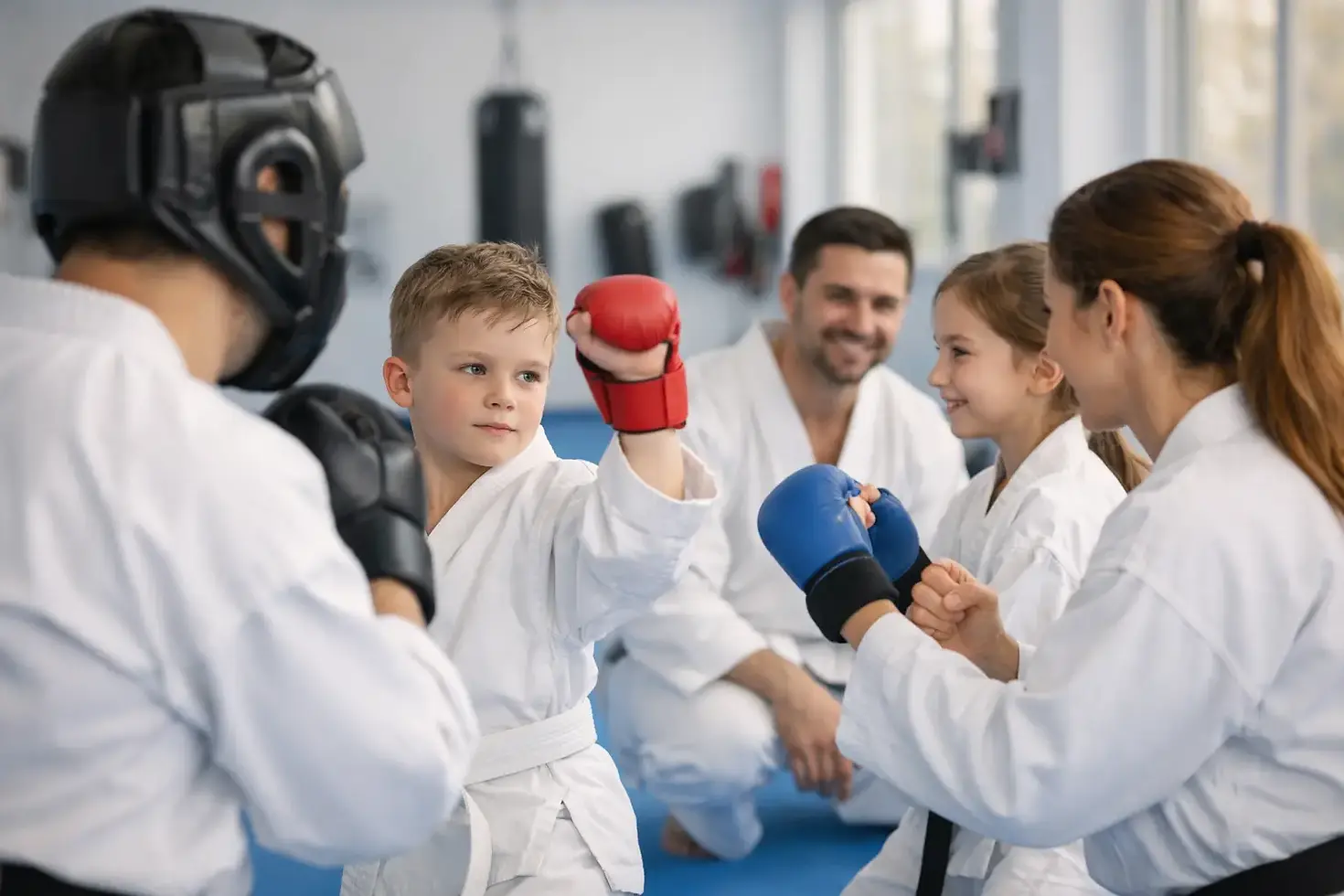
Partner work deserves special attention. Controlled drills can teach awareness, timing, boundaries, and practical self-defense skills. But partners should be matched carefully by size, maturity, and experience whenever possible. Children should never be told to simply “figure it out” with a much larger or more aggressive partner.
Protective gear can also play a role when classes include sparring or contact drills. The equipment itself is not a guarantee of safety, though. Gear works best alongside supervision, rules, controlled intensity, and a school culture where students respect a partner’s limits.
The instructor sets the emotional safety standard
Physical safety and emotional safety belong together. A student who is afraid of being embarrassed, yelled at, or mocked may hide an injury or push past a limit to avoid disappointing someone. That is not healthy discipline.
Healthy karate instruction can be firm without being harsh. Students should be challenged to focus, listen, and keep trying. They should also be able to ask questions, request a break, and tell an instructor when something hurts or feels unsafe.
For children especially, the goal is not to create fear. It is to build self-respect. When a child learns that their voice matters and their boundaries deserve respect, they carry that lesson into school, friendships, and future challenges.
Common Karate Injuries and How Good Schools Reduce Them
Most karate-related injuries are minor: a bruised shin, sore muscles after a new workout, a small scrape, or a mild strain from moving incorrectly. More serious injuries are less common, but they can happen, particularly in programs that allow uncontrolled contact or move too quickly into intense sparring.
Good instruction reduces risk in practical ways. Students warm up, use correct technique, increase intensity over time, and avoid training through sharp pain. An instructor should modify activities for students recovering from an injury or managing a health condition. Families should also share relevant medical information privately so the instructor can support the student appropriately.
There is a useful distinction between normal effort and warning signs. It is normal to feel tired after class, to experience mild muscle soreness after new exercise, or to feel challenged while learning coordination. Sharp pain, dizziness, swelling, repeated headaches, joint instability, or pain that continues should be taken seriously. Rest and medical guidance are not signs of weakness.
Parents can help by making sure children arrive hydrated, wear comfortable clothing, keep nails trimmed, and understand that they must tell an adult if they are hurt. Those small habits support a safer training environment for everyone.
Is Karate Safe for Young Children?
Yes, when the class is designed for young children rather than a scaled-down adult program. Early karate classes should emphasize listening, balance, coordination, basic movement, confidence, and respectful behavior. Children may learn simple blocks, strikes, stances, and self-protection concepts, but they do not need hard contact to gain the benefits of martial arts.
The best instructors understand that young children learn through repetition, encouragement, and clear routines. They keep directions simple and give students frequent opportunities to succeed. A child who learns to wait their turn, follow through on a task, and recover after making a mistake is developing skills that matter far beyond the training floor.
Some children need time to adjust to a new environment, especially if they are shy, highly energetic, or easily frustrated. That does not mean karate is a poor fit. It means the school should meet them with patience and a plan. A welcoming instructor can help a hesitant child build confidence one class at a time.
Self-Defense Training Should Build Judgment, Not Aggression
Some parents worry that karate will teach their child to fight. A responsible karate program teaches the opposite. It makes clear that physical skills are for protection, not for showing off, bullying, or solving ordinary disagreements.
Practical self-defense starts before any physical technique. Students learn awareness, distance, assertive communication, and how to seek help. They learn that the safest conflict is often the one they avoid. If a situation becomes unsafe, the goal is to create space, get away, and find support, not to win a fight.
This approach is especially meaningful for girls and women seeking greater confidence in everyday safety situations. Empowerment is not about living in fear or believing you must handle every threat alone. It is about practicing clear boundaries, recognizing options, and trusting yourself to respond with purpose.
Questions to Ask Before You Enroll
A trial class is one of the best ways to see whether a dojo is right for your family. As you visit, ask how beginners are introduced to partner drills and sparring, how instructors handle injuries, and whether students can modify training when needed. Ask how children are grouped and supervised, and what the school teaches about using martial arts outside class.
Pay attention to the answers, but also watch what happens in the room. Are students corrected with respect? Does the instructor notice when someone is struggling? Are more experienced students expected to protect and encourage beginners? Does the class feel focused without feeling intimidating?
A school may have different approaches to sparring, competition, or conditioning, and that is okay. The best choice depends on your family’s goals. What should not vary is the commitment to student welfare, mutual respect, and responsible instruction.
At The Blazing Dragon Karate Dojo, families are encouraged to see karate as more than an activity on the calendar. It is a place to build children’s strength from the inside first, practice real-world awareness, and grow alongside people who want to see them succeed.
Safety Grows Through Consistent Practice
No activity can promise zero risk. A child can trip on a playground, an adult can strain a muscle at the gym, and a karate student can occasionally leave class with a sore leg or a lesson learned the hard way. But avoiding every challenge is not the same as keeping someone safe.
Thoughtful karate training gives students a safer place to practice challenge itself. They learn how to manage their bodies, regulate big feelings, respect limits, and keep going with discipline. Those are protective skills that reach far beyond the dojo.
Choose a class where your family feels seen, where questions are welcomed, and where confidence is built with care. When students are trained with patience, clear boundaries, and community support, they do not just learn how to defend themselves. They learn they are worth protecting.


Comments