


Karate Class Etiquette for Confident Beginners
- 4 hours ago
- 6 min read
A karate class can feel powerful from the moment you step onto the training floor. Students line up, focus their attention, practice with purpose, and encourage one another through challenging moments. For a new child, parent, or adult student, that structure may seem unfamiliar at first. Karate class etiquette is what makes the room feel safe, focused, and welcoming instead of intimidating.
At its heart, etiquette is not about acting perfect or knowing every tradition before your first class. It is about showing respect for yourself, your training partners, your instructor, and the shared space where everyone is growing. When families understand these expectations, they can walk into class ready to learn, make mistakes, and keep moving forward.
Why Karate Class Etiquette Matters
Traditional karate teaches more than how to block, strike, move, and protect yourself. It teaches students to manage their energy, listen closely, and understand that real strength includes self-control. The habits practiced in class can show up at school, at home, at work, and in difficult social situations.
For children, etiquette creates a clear and steady routine. They learn when to listen, when to speak, how to wait their turn, and how to accept correction without shutting down. Those are meaningful skills for a child learning to resist peer pressure and believe in their own ability.
For women and adult beginners, etiquette helps build a training environment where no one has to prove they belong before they begin. You do not need to be flexible, athletic, or experienced to deserve respect on the floor. You simply need a willingness to learn and a commitment to train safely with others.
Karate Class Etiquette Starts Before Class
Respect for class begins before the first bow or greeting. Arriving a few minutes early gives students time to settle in, use the restroom, put away distractions, and prepare their minds for training. Rushing in late can happen, especially for busy North Texas families balancing school, work, and traffic. When it does, enter quietly and follow the instructor's direction rather than trying to jump into the middle of a drill.
Wear a clean uniform if your dojo uses one, or clean, comfortable workout clothing for an introductory class. Trim fingernails and toenails, remove jewelry that could catch or scratch someone, and tie back long hair. These small details protect training partners and show that everyone’s safety matters.
Food, gum, and drinks other than a water bottle usually stay off the training floor. A phone should be silenced and put away unless there is a family or medical reason to keep it close. Karate is one of the few places where children and adults can practice being fully present. Protect that opportunity.
Bring a Ready-to-Learn Attitude
A student does not have to arrive in a perfect mood. Kids may have had a hard school day. Adults may be carrying stress from work, caregiving, or life. The goal is not to pretend those feelings do not exist. The goal is to choose a respectful response once class begins.
That may mean taking a breath before speaking, trying again after a mistake, or asking for help instead of becoming frustrated. A strong karate student learns that discipline is not harshness. It is the ability to guide your actions even when your emotions are loud.
Respect the Instructor and the Learning Space
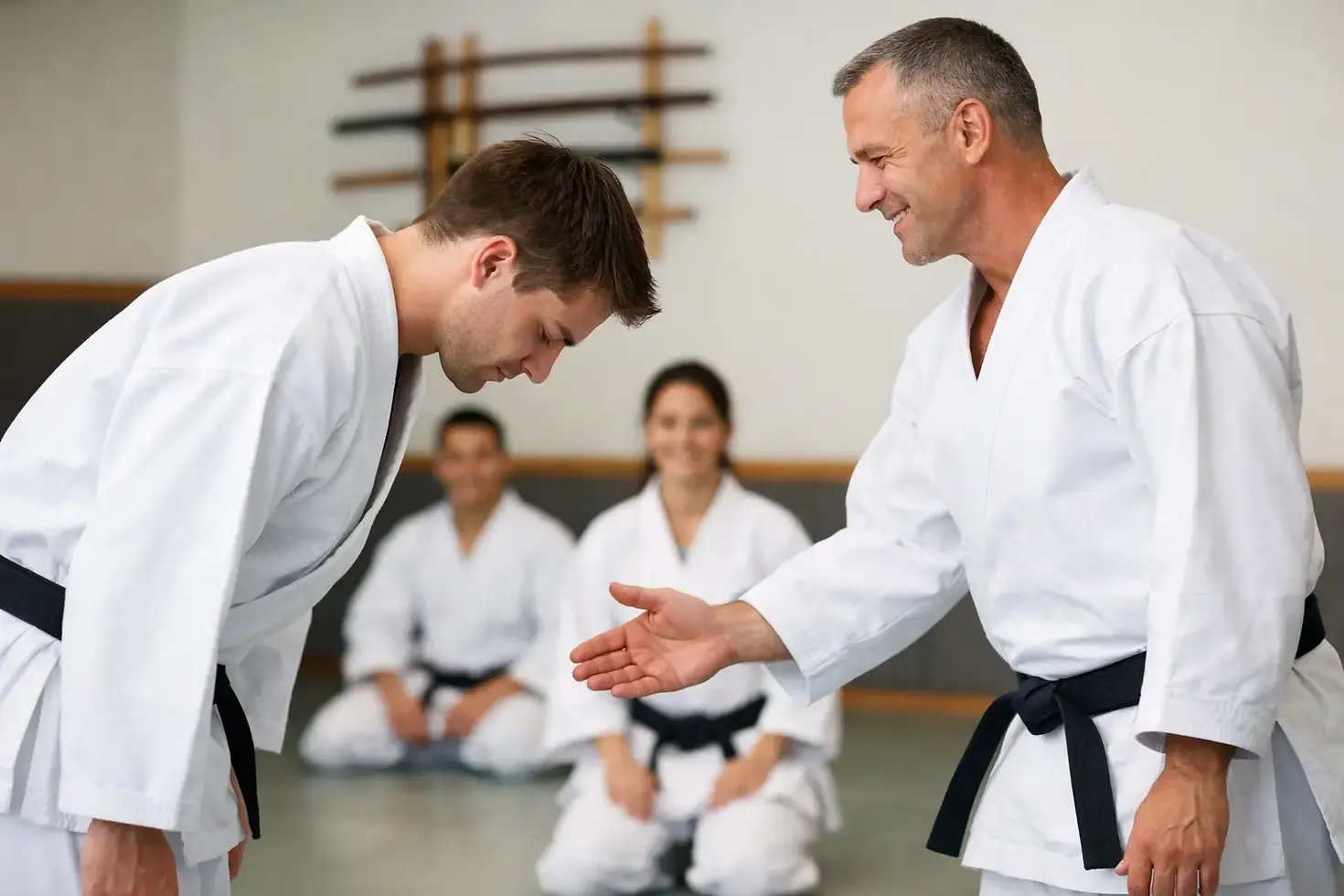
In most karate programs, students line up, greet the instructor, and follow a class routine. The specific words, bows, and customs can differ by school and style. If you are new, watch carefully and follow along. No one expects a beginner to know everything on day one.
When an instructor is explaining a technique, students should face forward, listen, and avoid side conversations. Questions are welcome, especially when something affects safety or understanding. The best time to ask is usually after the instructor has finished the full explanation, unless they invite questions along the way.
Correction is part of training. Being told to adjust a stance, lower a shoulder, move more slowly, or pay closer attention is not a punishment. It is coaching. Parents can reinforce this lesson by praising effort, focus, and respectful listening rather than only asking whether their child was the best in class.
The training floor also deserves care. Do not run across it without instruction, lean on equipment, or leave personal belongings where someone can trip. If you see something out of place, help restore order. Leadership often begins with small acts of responsibility.
Practice Safely With Partners
Karate is built on community. Even when students are practicing individual forms or conditioning, they share the space and help shape the tone of class. During partner drills, safety and control must always come before speed or power.
Use the level of contact your instructor has assigned. Never increase force because you are excited, competitive, or trying to impress someone. A good partner helps another student learn. They do not turn practice into a test of toughness.
Communicate if something hurts, if you need a slower pace, or if you do not understand the drill. Speaking up is not weakness. It is wise self-protection. This is especially valuable for beginners, children, and anyone returning to exercise after time away.
Respect includes honoring personal boundaries. Ask before making physical contact outside the drill, follow the instructor’s pairing guidance, and avoid jokes that embarrass another student. A dojo should be a place where people can build confidence without fear of being mocked for their body, skill level, identity, or mistakes.
Control Is More Impressive Than Power
Students sometimes believe a hard kick or loud strike proves they are strong. In reality, control is the greater skill. The ability to stop a technique at the right distance, adjust to a smaller partner, and stay calm when a drill gets challenging shows maturity.
This is one reason karate can be so valuable for children. They learn that having power does not give them permission to misuse it. They learn that confidence does not require bullying, showing off, or putting others down.
How Parents Can Support Good Etiquette
Parents do not need a karate background to help their children succeed. A few consistent habits make a major difference. Encourage your child to arrive prepared, listen when instructors speak, and practice at home only when it is safe and appropriate.
Avoid coaching from the sidelines during class unless an instructor asks for your help. Children often learn best when they can focus on one source of instruction and take ownership of their progress. After class, try questions such as, “What did you work hard on today?” or “What did you learn about focus?” These questions keep the conversation centered on growth.
If your child is struggling with behavior, confidence, or attention, share that privately with the instructor. A caring martial arts program can support a child’s development, but instructors need the full picture to offer the right encouragement and structure.
Families who train together have a special opportunity to model respect across generations. A child who sees a parent try a new skill, accept feedback, and keep going after a mistake learns a lesson that reaches far beyond karate.
Common Beginner Questions About Karate Class Etiquette
What if I do not know when to bow or where to stand?
Follow the instructor or an experienced student near you. Every dojo has its own routine, and learning it takes time. Showing up with humility and attention matters more than getting every detail right immediately.
Is it okay to take breaks?
Yes. Tell the instructor if you feel dizzy, injured, overwhelmed, or need water. Training should challenge you, but it should not ignore your health. The right balance depends on age, fitness level, and the day you are having.
What should I do if I make a mistake?
Reset, listen, and try again. Mistakes are not interruptions to karate training. They are how training works. A respectful student does not blame a partner, laugh at someone else, or quit because a skill is difficult.
At The Blazing Dragon Karate Dojo, the goal is not to create students who merely look disciplined for an hour. It is to help people carry that strength into everyday life. Each respectful greeting, focused stance, and controlled technique is a quiet vote for the person you are becoming. Come ready to learn, support the people beside you, and let your confidence grow from the inside first.


Comments