


Best Self Defense Skills Beginners Can Learn
A self-defense skill is not only what you do when someone gets too close. It is the confidence to notice trouble early, the voice to set a boundary, and the calm to choose your next move. The best self defense skills beginners can learn start there: with practical habits that help children, women, and families move through everyday life with greater awareness and self-respect.
For a beginner, the goal is never to look tough or win a fight. The goal is to get safe, protect your space, and return home to the people who love you. That is why a good martial arts program teaches more than punches and kicks. It helps students build physical ability, clear judgment, and the steady confidence to act when it counts.
The Best Self Defense Skills for Beginners Start Before Contact
The strongest self-defense decision often happens before physical contact. Awareness means paying attention to where you are, who is around you, and what feels out of place. It means looking up from a phone while walking to the car, choosing well-lit paths, trusting discomfort instead of explaining it away, and knowing where the exits are when entering a new space.
This is not about living afraid. It is about moving with purpose. When beginners practice situational awareness, they learn that safety is a skill they can strengthen. Children can practice it by identifying trusted adults, staying close in crowded places, and checking in before changing plans. Adults can practice it by keeping their keys ready, avoiding isolated shortcuts, and listening to the inner signal that says, “Something is not right.”
Awareness also gives you more choices. The earlier you notice a concern, the more likely you can leave, call for help, or move toward other people without needing a physical response at all.
Use Your Voice and Set Clear Boundaries
A strong, clear voice is one of the most useful tools a beginner can develop. Many people freeze because they worry about seeming rude, overreacting, or drawing attention. Self-defense training helps replace that hesitation with direct language: “Stop.” “Back up.” “Do not touch me.” “I need help.”
The point is not to argue or convince someone to respect your boundary. It is to make the boundary clear, create attention from people nearby, and give yourself time to move away. Practice matters here. A student who has said those words aloud in class is more likely to find them under pressure than someone who has only thought about them.
For kids, this lesson should be age-appropriate and empowering. They need to know that a trusted adult will listen when they say they feel unsafe. They should also understand that being polite never requires accepting unwanted touching, secrets, bullying, or pressure from peers. Building children’s strength from the inside first gives them a foundation that reaches far beyond the dojo.
Build Balance, Distance, and a Safe Exit
Beginners do not need flashy techniques. They need reliable movement. Learning how to stand with balance, keep hands in a protective position, and move backward or sideways without crossing the feet can make a major difference in a stressful moment.
Distance is your friend. Creating space gives you time to think and makes it harder for another person to control your movement. A quality class teaches students to stay aware of their surroundings as they move, rather than backing into a wall, a car, or another hazard. It also reinforces an essential truth: if you can leave safely, leave. There is no prize for staying in a dangerous situation.
Practicing a safe exit can be as simple as moving toward a door, a group of people, a store employee, or a trusted adult. These choices sound basic, but they become far more dependable when rehearsed in a supportive setting.
Learn Simple Physical Tools, Not Fancy Moves
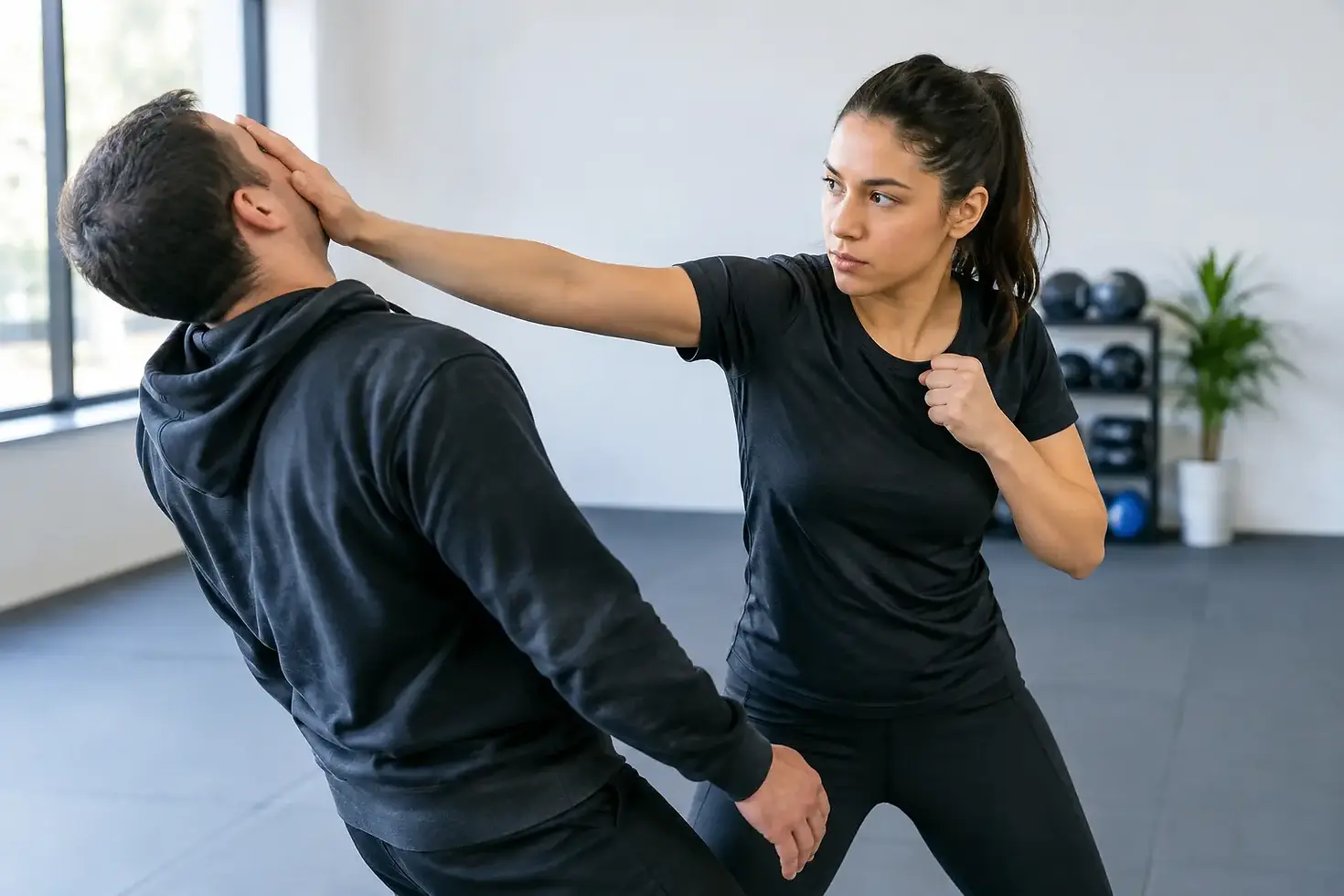
Physical self-defense techniques should be simple enough to remember under stress and practiced carefully with qualified instruction. Beginners benefit from learning how to use natural body tools, such as open-hand strikes, elbows, knees, and strong footwork, to create an opportunity to escape.
The trade-off is important: a technique that looks impressive can be difficult to perform when your heart is racing, your balance is off, or you are surprised. Straightforward movements, practiced again and again, are usually more useful than complicated combinations. Training should focus on body mechanics, control, distance, and getting away rather than trying to overpower another person.
Students should also learn that every situation is different. Size, age, ability, clothing, surroundings, and whether there is more than one person involved can all change the safest response. Martial arts training is not a promise that someone can handle every threat alone. It is preparation that improves the odds of making a safer decision and getting help quickly.
Practice Escaping Grabs and Getting Back Up
A practical beginner program includes controlled practice for common situations, such as someone grabbing a wrist, holding clothing, or blocking a path. The goal is not to trade force with force. It is to use positioning, leverage, a loud voice, and movement to break free and leave.
Another valuable skill is learning how to fall more safely and get back to your feet with awareness. Falls happen in sports, on playgrounds, and in everyday life. Knowing how to protect your head, recover your balance, and stand without turning your back on a possible threat can support both safety and confidence.
These skills must be taught with patience and respect. Students should never be pressured into drills that feel unsafe or humiliating. Especially for women, children, and people with past experiences of trauma, an affirming training environment matters. Consent, communication, and appropriate partner work are part of real self-defense education.
Train Your Mind Along With Your Body
Stress can make people freeze, rush, or lose track of simple choices. That is why breathing, focus, and repetition belong in self-defense training. A student who learns to take one steady breath, look around, and make a clear decision is building a skill that applies at school, at work, in family life, and in an emergency.
Regular martial arts practice also improves coordination, fitness, posture, and stamina. Those gains are meaningful, but confidence may be the biggest change families notice. A child who learns to speak up in class may be less vulnerable to peer pressure. A woman who feels stronger in her body may walk with more purpose. A parent who trains beside their child models discipline, perseverance, and healthy stress relief.
At The Blazing Dragon Karate Dojo, that growth is part of the bigger mission: where families rise together. Self-defense is not taught as fear-based training. It is taught as a way to honor your safety, your dignity, and your ability to face challenges with courage.
How Beginners Can Choose the Right Self-Defense Class
The right class should welcome questions and make beginners feel capable from day one. Look for instructors who explain why a skill matters, adjust drills for different fitness levels, and place safety above ego. A good program does not shame students for being nervous, uncoordinated, or new.
Ask whether the class covers awareness, verbal boundaries, escape strategies, and physical techniques. If a program focuses only on sparring or competition, it may still be great martial arts training, but it may not address the full range of everyday self-protection skills a beginner wants. Families may also want a class that reinforces values such as respect, discipline, responsibility, and leadership.
Consistency matters more than intensity. One class will introduce useful ideas, but regular training builds the reactions, strength, and confidence that make those ideas easier to use. Start at your current level, wear comfortable clothes, and give yourself permission to learn one skill at a time.
Your first goal does not have to be becoming a fighter. Let it be becoming someone who notices, speaks up, moves with confidence, and knows they deserve to be safe. That is a powerful place to begin.


Comments