


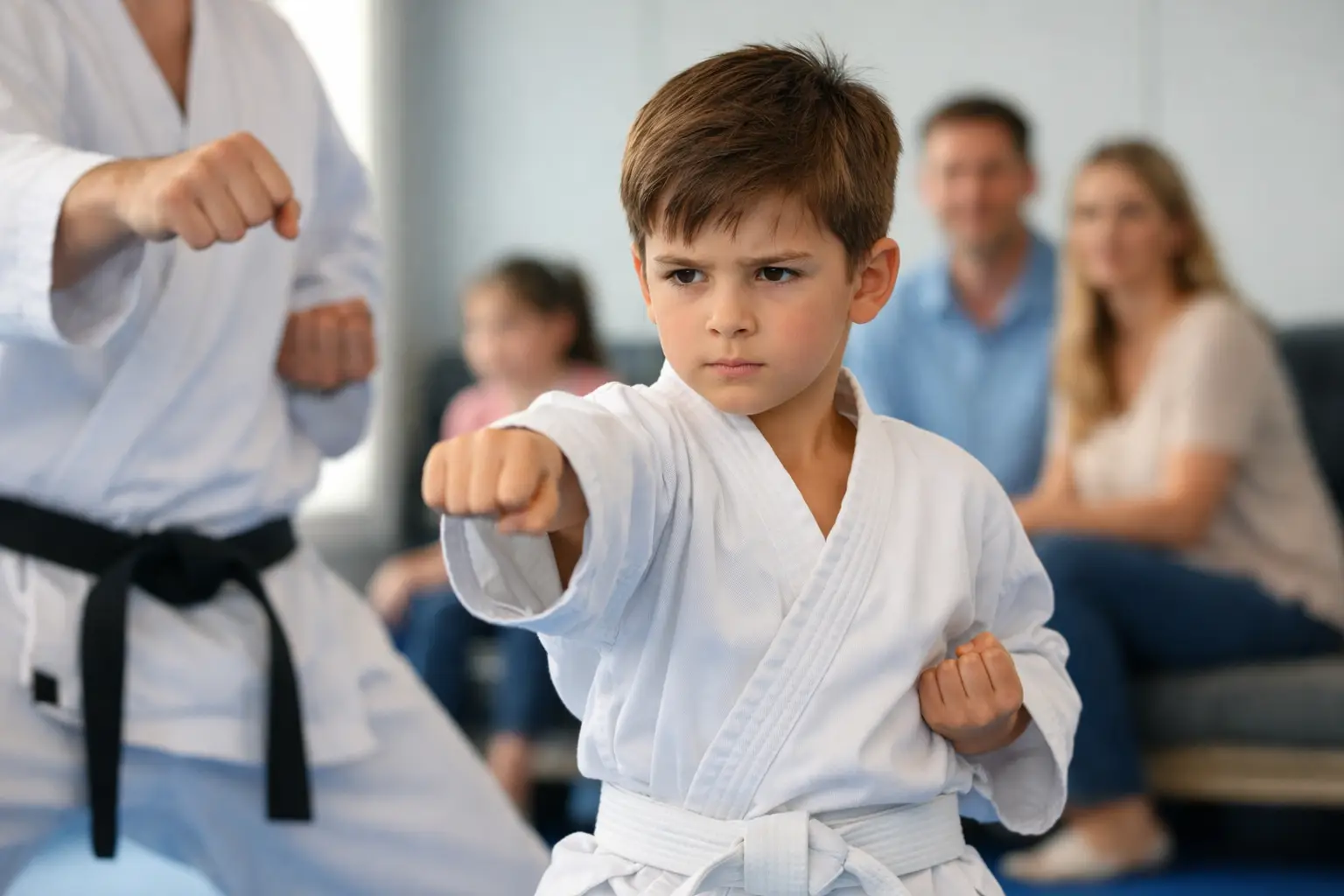
Does Karate Improve Concentration? What Families See
A child is halfway through homework, then notices the dog, a phone notification, a snack, and suddenly the worksheet has been forgotten. A parent knows that moment well. So, does karate improve concentration? For many students, it can - not through a quick fix, but through repeated practice that teaches the mind and body how to return to the task at hand.
Karate gives concentration somewhere real to go. Students listen for instructions, hold a stance, remember a sequence, watch a partner, control their energy, and keep trying when something feels difficult. Those habits can carry into school, home responsibilities, work, and everyday decisions.
How Karate Builds Focus One Class at a Time
Concentration is not simply the ability to sit still. It is the ability to notice what matters, stay with it long enough to learn, and refocus after distraction. Traditional karate creates regular opportunities to practice all three.
At the beginning of class, students are asked to settle in. They learn to stand with intention, listen when an instructor speaks, and give their full attention to the next direction. That may sound simple, but for a busy child or an adult carrying the weight of a long day, it is meaningful practice. The message is clear: your attention has value, and you can learn to direct it.
Then comes the physical work. A student cannot perform a block, strike, stance, or movement pattern while mentally wandering very far away. Karate asks for awareness of posture, balance, breathing, timing, and space. The body gives immediate feedback. If the stance is rushed or the eyes are elsewhere, the movement feels less stable. Students learn to pause, adjust, and try again.
That connection between attention and action is one reason karate can be especially helpful for families looking beyond a generic workout. The goal is not just to burn energy. It is to build children’s strength from the inside first.
Repetition Teaches the Brain to Stay With a Challenge
Karate includes repetition, and repetition is where a lot of growth happens. Students may practice the same movement several times before it starts to feel natural. They may repeat a form or sequence until they can remember what comes next without being prompted.
For some children, that process is a new experience. They may be used to giving up when an assignment, sport, or social situation becomes frustrating. In class, they learn that being a beginner is not a failure. It is the starting point. Each careful repetition says, “I can stay with this.”
That mindset can support concentration outside the dojo, too. A child who learns to reset after missing a step may be more willing to reread a difficult question in class. A teen who practices patiently may be better prepared to finish a project instead of abandoning it. Progress is not always fast, but it becomes more familiar.
Does Karate Improve Concentration for Children?
For many children, karate gives focus a structure they can feel. Rather than hearing “pay attention” over and over, they have clear expectations: eyes forward, listening ears on, hands ready, respect for space, and effort through the full activity.
The routine matters. Children often do well when they know what comes next. A class with a consistent beginning, skill practice, conditioning, partner work, and closing creates a dependable rhythm. Within that rhythm, students learn that focus is not a mood they have to wait for. It is a choice they can practice.
Karate also makes self-control visible. A child may have the power to move quickly, but must learn when to move and when to wait. They may feel excited during partner drills, yet need to use control and respect. This is not about making children quiet or taking away their personality. It is about helping them lead their own energy instead of letting their energy lead them.
Parents may notice small changes first: less resistance to finishing a task, better listening during conversations, more patience with siblings, or greater pride in following through. Those changes are not guaranteed after a few classes, and every child develops at a different pace. But steady training gives those skills a place to grow.
What About Children Who Have Trouble Sitting Still?
Karate can be a strong fit for children who learn best through movement. It does not require them to spend an hour at a desk. Instead, it teaches focus while they are active. A student can channel energy into footwork, drills, and conditioning while learning to respond to cues and maintain control.
Still, karate is not a medical treatment or a replacement for support a child may need at school or from a healthcare professional. Children with ADHD, anxiety, learning differences, or sensory needs can benefit from a supportive martial arts environment, but their needs should be respected as individual. The best instruction offers clear guidance, encouragement, and room to grow without shame.
A parent can help by sharing relevant needs with the instructor and by looking for a program that values character as much as performance. The right class should challenge a child while also helping them feel seen, capable, and safe.
Focus Is Also a Form of Confidence
Many people think confidence comes from being the loudest person in the room or winning every competition. Real confidence is often quieter. It is knowing you can listen, learn, make a correction, and respond with purpose.
Karate builds this kind of confidence because students see themselves improve through effort. They remember a longer sequence. They hold a stance longer than before. They speak more clearly. They earn the trust to work with a partner. These moments teach a powerful lesson: “I can pay attention, and my effort changes what I can do.”
That lesson matters when peer pressure shows up. Children and teens need more than the ability to follow directions. They need the inner steadiness to pause before reacting, recognize when something feels wrong, and make a choice that protects their dignity. Concentration supports that pause.
For women, focus can also support practical self-protection. Awareness training encourages students to notice their surroundings, trust their instincts, and make deliberate decisions rather than freeze in a stressful moment. Physical skills matter, but so does the ability to stay present and act with clarity.
How Families Can Help Concentration Carry Over
Karate class is a training ground, but home is where the habits get tested. Families do not need to turn every evening into a strict boot camp. A few consistent connections can help children recognize that the focus they use in class belongs to them everywhere.
After class, ask a specific question such as, “What was hardest to remember today?” or “When did you have to refocus?” These questions are more useful than asking whether class was good. They help a child name the skill behind the activity.
At home, celebrate effort with the same language used in training. Notice when your child returns to homework after a distraction, waits calmly for a turn, or keeps working through a frustrating task. Say what you saw: “You got distracted, took a breath, and came back to it.” That helps concentration feel like a strength, not a constant correction.
It also helps to protect rest. Focus is harder when children are exhausted, overscheduled, hungry, or constantly switching between screens and activities. Karate can provide healthy structure, but it works best as part of a family routine that leaves room for sleep, meals, conversation, and recovery.
Why the Right Dojo Environment Matters
Not every martial arts program teaches concentration in the same way. A class that only pushes students to perform faster or compete harder may miss the deeper lesson. A supportive dojo teaches that discipline is not punishment. It is self-respect in action.
At The Blazing Dragon Karate Dojo, families train in an affirming space where students are encouraged to grow strong, stay aware, and support one another. That community piece matters. Children concentrate better when they feel secure enough to make mistakes and brave enough to try again.
For parents in Wylie and surrounding North Texas communities, karate can become more than another after-school activity. It can be a shared practice of attention, resilience, safety, and character. When families train together, children see that focus is not just something adults demand from them. It is something everyone keeps practicing.
A focused child will still have distracted days. A confident adult will still have stressful moments. The lasting gift of karate is not perfect concentration. It is the growing ability to take a breath, return to center, and choose the next right action.


Comments